
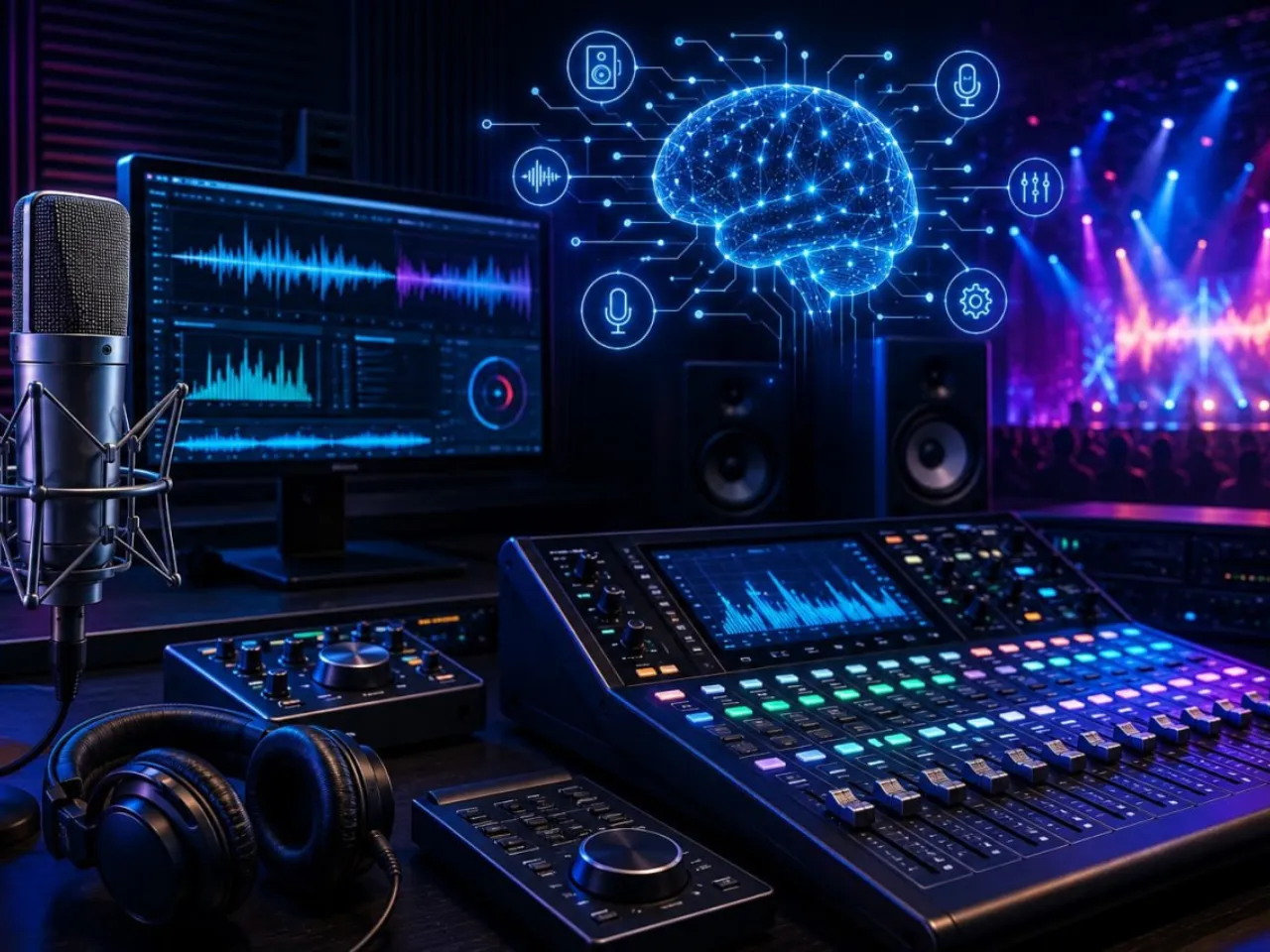
Artificial Intelligence and Professional Audio: What’s Changing in the Industry

Artificial Intelligence (AI) has become one of the main driving forces of the technological world in recent years. If previously it was mainly used in data analysis or automation, today AI is actively transforming the audio industry as well.
From music creation to live concert sound management, new technologies are changing how professionals work and what results end users receive.
The New Generation of Smart Audio Systems
Companies producing modern professional audio equipment are making significant investments in the development of artificial intelligence.
AI-powered systems can automatically analyze the acoustics of a space, detect noise sources, and optimize sound distribution.
Today, many stage sound systems already include smart tuning tools that perform in just a few minutes what previously required hours and the participation of an experienced sound engineer.
Studio Work Becomes Faster and More Efficient
The impact of AI is most noticeable in recording studios. Modern studio monitors and sound processing software can automatically detect frequency issues, balance the sound, and suggest optimal settings.
Many professionals note that artificial intelligence does not replace the sound engineer, but significantly speeds up the workflow.
As a result, productivity increases while the final quality remains under the control of the specialist.
New Opportunities for DJs
The electronic music sector is also actively using AI technologies. Modern DJ equipment can analyze the structure of music tracks, suggest transitions, and even help create set sequences.
Although experienced DJs continue to rely on their creative approach, AI has become a powerful assistant, especially during live performances.
Smart Microphones and Sound Processing
One of the important components of audio technology is microphones, which are also undergoing significant changes. New-generation models can reduce background noise, isolate speech, and automatically adjust recording parameters.
This is especially important for podcast creators, broadcasters, and online content producers who need high-quality sound without complex technical adjustments.
A New Level of Concerts and Events
Today, AI is used not only for sound but also for lighting control. Modern lighting equipment can be synchronized with music and change lighting effects in real time, creating more impressive shows.
At the same time, smart concert sound systems can monitor sound levels in different areas, ensuring even audibility throughout the entire space.
The Revolution in Home Audio
The advantages of artificial intelligence have also become available to ordinary users. Modern home audio systems can analyze room dimensions, wall positions, and automatically adjust sound settings.
That’s why people who want to buy speakers are increasingly choosing smart solutions that deliver high quality without the need for professional knowledge.
New-generation home audio equipment is often equipped with voice assistants, wireless connectivity, and automatic equalization systems.
The Role of Sound Processors in the AI Era
The effective operation of artificial intelligence largely depends on the development of modern sound processors.
These devices process large amounts of data in real time and enable systems to respond quickly to environmental changes.
As a result, both live events and studio recordings achieve better outcomes.
From Installation to Final Result
New technologies are also changing the process of installing audio systems. If previously system tuning could take days, today AI tools significantly reduce that time by automatically analyzing the characteristics of the space and offering optimal solutions.
This is especially important for large business centers, hotels, concert halls, and educational institutions.
The Future of Audio Technology
According to experts, AI will not replace creative thinking and human experience, but it will become an integral part of the industry.
Modern audio equipment is already evolving toward smarter, more automated, and flexible systems.
Even traditional dynamic speakers and home audio players are being equipped with new technologies that improve sound quality and ease of use.
Conclusion
Artificial intelligence is fundamentally changing the audio industry — from studio work to live concerts and home entertainment.
The new generation of audio solutions makes it possible to achieve higher quality, faster setup, and more efficient work.
Companies and professionals who are investing in AI-powered technologies today are already shaping the standards of tomorrow’s audio industry.