
The success of any event or stage production largely depends on lighting. Professional lighting not only provides visibility but also creates atmosphere, highlights key moments and leaves a lasting impression. In this article we will look at how to choose the right equipment — from basic fixtures to complex effects.
1. Define the type and scale of the event
The first step is to understand what kind of event you are organising.
- For small corporate events, static lights and a few moving lights are usually sufficient.
- For large concerts or theatre productions you will need powerful moving lights, lasers, smoke and stage effects generators and full lighting control systems.
2. Main types of fixtures
Static lights Fixed profile, wash and LED panel fixtures provide the main and background lighting. They are stable, reliable and ideal for general illumination.
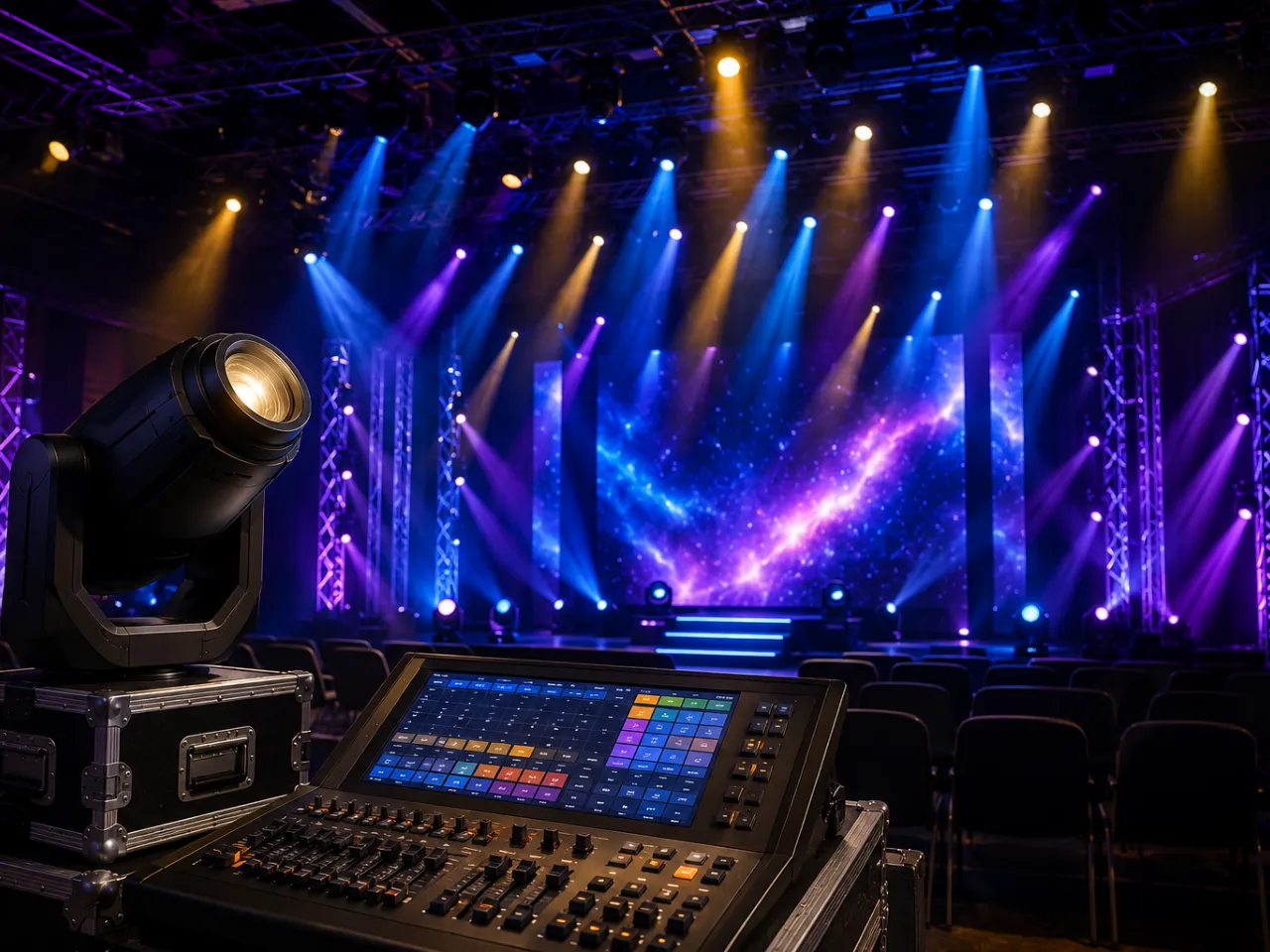
Moving lights Moving heads are the heart of the modern stage. They can pan, tilt, change colour and focus, and create dynamic effects. For large events they are essential.
Lasers add bright graphic effects and beams that look especially impressive in the dark and when combined with smoke.
Smoke and stage effects generators Smoke, haze and CO₂ effects make the light visible and add drama. Without them many lighting effects lose their impact.
Vintage lamps In some creative projects vintage lamps are used as decorative or retro elements to create a unique atmosphere.
3. Lighting control systems
For a professional level you need lighting control systems (DMX, Art-Net and others). They allow you to program scenes, synchronise light with music and control all fixtures from a single console. Without proper control even the most expensive fixtures will not deliver the desired result.
4. Important technical points
- Power and light output
- Colour rendering (CRI)
- Quiet operation (especially for theatre)
- Durability and ease of transport
- Power consumption
5. Where to buy and install
The best place to find quality equipment is a specialised lighting equipment showroom.
If full design, installation and setup are required, an equipment installation showroom can help implement the project from start to finish, ensuring a safe and professional result.